Baltimore Web Design: Finding the Right Agency for Your Business
Baltimore's Design & Tech Scene
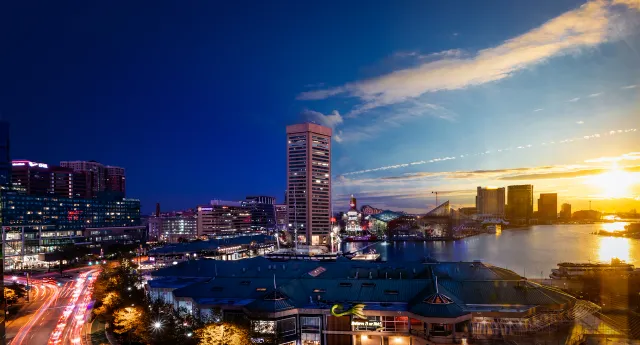
Baltimore has changed a lot over the past decade — and the city's creative and tech sectors are a big part of that story. The Station North Arts District has become a genuine hub for designers, studios, and creative agencies. Harbor East draws established firms and professional services clients who need polished digital presence to match their physical one. MICA keeps feeding the city a steady stream of design talent that often stays local.
That matters for you as a business owner. You're not hunting for a good agency in a vacuum — you're operating in a city with a real creative community, and the better agencies here are embedded in it. They know the clients, the industries, and the context that comes with being Baltimore-based.
That said, not every shop calling itself a "web design agency" is built the same. The city has everything from solo freelancers to mid-sized studios, and the quality range is wide. This guide is meant to help you cut through the noise and find the partner that actually fits your business — not just the one with the best-looking proposal.
What to Look for in a Local Agency
Before you start reaching out to agencies, it helps to know what you're actually evaluating. A few things worth getting clear on:
Specialization vs. generalism
Some agencies do everything — branding, web, print, social, video. Others are narrowly focused on web design and development. Neither is wrong, but you should know which you're working with. A studio that does ten different things rarely goes deep on any one of them. If your primary need is a high-quality website, look for a team that treats web design and development as a craft, not a line item on a services menu.
Design and development under one roof
One of the most common friction points in web projects is the handoff between design and development — especially when those teams are separate. When a studio handles both, the design decisions are made with the build in mind from the start. Fewer surprises. Fewer "we can't actually do that" moments two weeks before launch.
Technology fit
Ask what technology they build on. This isn't a trick question — it's practical. Agencies that default to whatever CMS is easiest for them (rather than what fits your needs) are a flag. A good shop will have a point of view on technology: when to use WordPress, when to go headless, when a custom build makes sense. They should be able to explain that reasoning in plain terms.
Client fit
Agencies have a sweet spot in terms of client size and budget. A studio that primarily builds $3,000 template sites isn't going to bring the same thinking or process to a $25,000 custom build — even if they say they can. Likewise, a large agency that typically works with enterprise clients may have process overhead that doesn't serve a mid-sized business well. Look for studios where your project is a normal engagement, not their smallest job or their biggest stretch.
Evaluating Portfolios
The portfolio is where most people start. But most people look at the wrong things. Here's how to actually evaluate what you're seeing.
Look beyond the visual
A beautiful screenshot doesn't tell you much. Load the actual site. How does it perform on mobile? How fast does it load? Is the navigation intuitive? Does the content feel considered, or like it was dropped in after the fact? Design is how something works, not just how it looks — and portfolios should reflect that.
Look for relevance, not recognition
You don't need to recognize the clients in a portfolio. What you're looking for is whether the work looks like the kind of work you need. If you're a professional services firm, does the agency have experience building sites that communicate credibility and trust? If you're in hospitality or retail, does their work understand that visual storytelling and user flow are doing heavy lifting?
Ask about outcomes
Any agency worth hiring can tell you what they built. The better ones can also tell you what happened after launch — whether the client saw increased inquiry volume, what changed about their online presence, how the site aged. That kind of thinking is a sign that the studio views the website as a business tool, not just a design deliverable.
Check the work they don't show
Most studios curate their best work for their portfolio. That's fair. But it's worth asking: what's a recent project that was challenging, and how did you handle it? The answer tells you a lot about how they work under pressure and how they communicate with clients when things get complicated.
Process & Communication
The quality of a web project depends as much on process as it does on talent. A technically skilled team with a poor process will still produce a frustrating experience — and often a worse outcome.
Discovery first
Any agency that's ready to start designing before they've understood your business is skipping the most important step. Good studios invest real time in discovery: understanding your goals, your audience, your existing content, your competitors, and the gaps in your current site. That work informs every design decision that follows.
Structured milestones
A clear project structure — discovery, wireframes, design, development, QA, launch — isn't bureaucracy. It's how you avoid the situation where you're four months in and the site looks nothing like what you expected. Ask for a clear timeline and clear deliverables at each stage. Ask how revisions are handled. Ask what happens if the project runs over scope.
Single point of contact
Find out who you'll actually be communicating with throughout the project. At larger agencies, it's common to have a sales conversation with senior people, then hand off to a junior account manager. That's not inherently bad — but you should know going in. At smaller studios, you're often working directly with the people doing the work, which can mean faster decisions and less translation loss.
Revision culture
Ask how many rounds of revisions are included. Ask what happens if you want significant changes after approval. The answer tells you whether the agency has a process that protects both parties, or whether they're setting up for scope creep or conflict. Neither unlimited revisions nor one-and-done is realistic — the middle ground is what you want.
Pricing Expectations
Web design pricing in Baltimore — like everywhere — varies enormously. You can find a freelancer to build a WordPress site for $2,000, and you can find a studio charging $150,000 for a custom platform build. Most established businesses looking for a quality custom website fall somewhere in the $15,000–$50,000 range for design and development alone.
That range is wide, so here's how to think about it:
Template-based builds typically run $3,000–$8,000. These are faster and cheaper, but they're inherently limited. The design choices are constrained by the template, and you're often competing with other sites that look similar.
Semi-custom builds — where a studio uses a framework like WordPress with custom design work — typically land in the $10,000–$25,000 range. This is where a lot of the Baltimore market sits for established small and mid-sized businesses.
Fully custom builds — designed from scratch, built on a modern stack — typically start around $25,000 and go up from there depending on complexity, integrations, and content needs.
At Duo Studio, most of our projects fall in the $20,000–$30,000 range. That's not where every business should be — but it's the range where we can do our best work without cutting corners, and where clients are typically getting sites that will serve them well for several years.
If you're trying to get a clearer picture of what drives cost in a web project, our guide on How Much Does a Website Redesign Cost in 2026? walks through the key variables in detail.
What not to optimize for
The lowest quote is rarely the best value. A site that underperforms, requires constant fixes, or needs to be rebuilt in two years costs more in the long run than a well-built site at a higher initial investment. The same logic applies to speed: agencies that promise unrealistic timelines often hit those timelines by cutting corners in QA, content strategy, or revision cycles.
Local vs. Remote Agencies
You don't have to work with a Baltimore agency to get a good website. There are excellent studios all over the country, and remote work has made geography largely irrelevant for the execution side of web projects.
That said, there are real advantages to working with a local team — especially if your business is deeply tied to the Baltimore market.
Context and community. A local studio understands the regional market in ways that take time to learn. They know what credibility signals matter to Baltimore buyers, which industries are competitive, and which references land. That local knowledge shows up in small ways throughout a project — in how the site is positioned, how the copy is framed, how the visual identity fits the context.
Access. For some projects, being able to sit in the same room matters. Brand workshops, photography days, and content reviews can all go faster and more collaboratively in person. Not every project needs this, but it's a real option when you work with a local team.
Accountability. There's something different about working with a studio that's part of the same business community you're in. They have reputational stakes in the market you share. That's not a guarantee of quality — but it's a factor.
If you're also evaluating your brand alongside your website, it's worth reading our companion piece: Baltimore Branding Agency: What to Know Before You Hire. Many of the same evaluation principles apply, and for some businesses, working with a single studio that handles both is a real advantage.
What the Engagement Looks Like
Once you've selected an agency and signed a contract, here's what a typical engagement timeline looks like for a custom web project:
Weeks 1–2: Discovery. Kickoff call, stakeholder interviews, review of existing materials, competitive analysis, sitemap and content audit. The goal is alignment on goals and scope before any design work begins.
Weeks 3–5: Wireframes and content strategy. Low-fidelity layouts that establish structure, user flow, and content hierarchy. This is where you make sure the site's bones are right before investing in visual design.
Weeks 6–9: Visual design. Full-fidelity mockups in design software. This is the stage most people think of as "design" — the look and feel, typography, color, imagery direction.
Weeks 10–14: Development. Translating approved designs into a working site. This includes CMS setup, responsive build, performance optimization, and integrations (forms, analytics, any third-party tools).
Weeks 15–16: QA and content entry. Testing across devices and browsers, final content entry, and pre-launch review. This is also when you train on the CMS if you'll be managing content yourself.
Week 17+: Launch and post-launch. Deploy, DNS updates, final checks. Most agencies offer a short post-launch support window to catch anything that surfaces after go-live.
That's a rough four-month arc for a mid-complexity project. Simpler projects move faster; projects with complex integrations, large content libraries, or significant stakeholder review processes can run longer.
For a broader look at how to evaluate agencies across the board — not just locally — our guide How to Choose a Web Design Agency covers the full framework.
FAQ
How much does web design cost in Baltimore?
It depends on what you're building. A basic template-based site might run $3,000–$8,000. A custom-designed and developed site for an established business typically falls in the $15,000–$35,000 range. More complex builds with custom functionality, integrations, or large content needs can run higher. Most quality agencies will give you a project estimate after a discovery conversation — be cautious of any studio that quotes a flat price before understanding your requirements.
How long does a web design project take?
A mid-complexity custom site typically takes three to four months from kickoff to launch. Simpler projects can move in six to eight weeks. More complex builds — large content libraries, multiple integrations, phased rollouts — can take five to six months or more. Timeline is also affected by how quickly clients can provide feedback, content, and approvals. Delays on the client side are one of the most common reasons projects run over schedule.
Should I hire a local Baltimore agency or a remote studio?
Both can produce excellent work. The advantage of a local agency is market familiarity, the option for in-person collaboration, and shared accountability within the same business community. The advantage of a remote studio is access to a wider talent pool and sometimes more competitive pricing. For businesses whose brand and audience are tied to Baltimore specifically, local tends to be the better fit. For businesses that operate nationally or have highly specialized needs, casting a wider net makes sense.
What's the difference between web design and web development?
Web design refers to the visual and UX work — layouts, typography, color, imagery, and how the site feels to navigate. Web development is the technical build — writing the code, setting up the CMS, handling functionality and performance. Some agencies do both under one roof; others specialize in one or outsource the other. Working with a studio that handles both tends to produce more cohesive results, since the design and build decisions are made by teams that understand each other's constraints.
Final Thoughts
Hiring a web design agency is a significant decision — not just financially, but in terms of how much time and organizational energy you'll invest in the process. The good news is that Baltimore has real options: studios doing thoughtful, well-crafted work for established businesses across a range of industries.
The key is doing the evaluation work upfront. Look at actual sites, not just screenshots. Ask about process, not just deliverables. Make sure the agency's typical client profile matches where you are. And be realistic about budget — the range in this market is wide, and what you pay has a real bearing on what you get.
Duo Studio is a Baltimore-based design and development studio co-founded by Dat Nguyen and Sonia Polyzos. We work with established businesses on branding, web design, and web development — building on WordPress and Next.js depending on what fits the project. If you're evaluating agencies and want to talk through your project, we're happy to have that conversation.
Share: